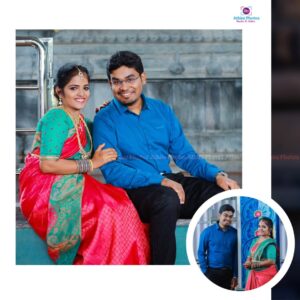

An engagement photoshoot is fundamentally different from a standard bridal session or daily wear. You are transitioning between multiple locations, dealing with shifting natural light, and standing close to the person you love. The camera lens has a unique way of interpreting color, depth, and texture.
A common misstep is assuming that a natural look requires less product. In reality, creating a flawless, invisible finish that holds up under high-definition camera lenses requires a deliberate, strategic approach to product selection and skin preparation.
The Golden Rule: HD Cameras vs. Human Eyes
High-definition lenses capture everything from fine lines to uneven hydration. Simultaneously, digital sensors and studio flashes tend to wash out colors by roughly 10% to 15%. This means your makeup must carry slightly more definition and structure than your everyday look, while maintaining an entirely seamless blend.
The goal is to focus on strategic enhancement rather than masking your features. By prioritizing lightweight, light-reflecting layers over heavy, opaque products, your skin retains its natural luminescence while appearing flawless on camera.
Step-by-Step Guide: Crafting the Flawless Natural Look
1. Skin Prep is the Real Foundation
The secret to a makeup look that doesn’t cake, slide, or look dry under intense sunlight lies entirely in how you prepare the skin. When your canvas is deeply hydrated and smooth, you naturally require far less color correction and foundation.
-
Exfoliation (24 Hours Prior): Use a mild lactic acid or enzyme exfoliant the night before. This sloughs off dead skin cells, ensuring your primer sits on a completely level surface without creating dry patches.
-
Layered Hydration: Apply a lightweight, hyaluronic acid-infused serum, followed by a gel-based moisturizer. Allow each layer to absorb for at least three minutes before moving to the next.
-
The Lip Treatment: Do not neglect your lips. Apply a thick layer of a nourishing lip mask during skin prep. By the time you reach your lip color step, your lips will be plump, smooth, and free of dry flakes.
2. Mastering Primers and Base Perfection
To keep your complexion looking fresh during a multi-hour outdoor session, you must establish a reliable barrier between your skin and the elements.
-
Strategic Priming: Avoid applying a heavy, mattifying primer all over your face. Instead, target your t-zone (forehead, nose, and chin) with a pore-blurring formula to control excess shine. On the perimeter of your face, use a hydrating, luminous primer to mimic a healthy, lit-from-within glow.
-
Foundation Selection: Opt for medium, buildable coverage with a satin or natural finish. Avoid foundations labeled “ultra-matte” (which can look flat and aging on camera) or “ultra-dewy” (which can look greasy under direct flash).
-
The Layering Technique: Dot the foundation in the center of your face where most discoloration occurs, and blend outward using a damp beauty sponge. This ensures the edges near your hairline and jawline remain incredibly sheer, preventing a mask-like appearance.
3. Undetectable Spot Concealing and Setting
Instead of blanketing your entire face in heavy foundation to hide imperfections, rely on precision concealing to maintain an airy, natural aesthetic.
-
Under-Eye Brightening: Choose a creamy, hydrating concealer that matches your skin tone exactly, or is at most half a shade lighter. Apply it only to the inner corners of the eyes where darkness resides, blending outward with your ring finger.
-
Blemish Correction: For spots or redness, use a high-pigment, pinpoint concealer that perfectly matches your foundation. Apply it with a fine detail brush directly onto the spot, let it sit for 30 seconds, and gently press the edges to blend.
-
The Micro-Powder Method: Rather than dusting a large powder brush across your whole face, use a small, fluffy eyeshadow brush paired with a translucent, finely milled setting powder. Press the powder exclusively onto the sides of your nose, between your brows, and on your chin. Leave your cheekbones free of powder to preserve their natural moisture.
Eyes and Brows: Soft Definition That Speaks Volumes
Defining the Eyes Without Heavy Drama
For a timeless, natural look, your eyes should look awake, bright, and expressive without being dominated by dark, heavy shadows.
[Soft Transition Shade: Warm Taupe/Soft Brown]
               │
               ▼
[Lid Shade: Satin Champange or Soft Rose Gold]
               │
               ▼
[Tightline: Espresso or Charcoal Tight-to-Lash]
-
The Eyeshadow Palette: Stick to monochromatic tones that complement your skin’s natural undertones. Soft taupes, warm browns, and delicate rose gold satins work beautifully. Apply a neutral transition shade across your crease to add depth, and press a soft, satin-finish champagne shade onto the center of your lids to catch the light.
-
Softer Liners: Swap out harsh, liquid black eyeliners for deep espresso brown or charcoal gel pencils. Apply the liner incredibly close to the lash line, then use a small angled brush to smudge the edges slightly. This gives the illusion of a thicker lash root without creating a stark, graphic line.
-
Lash Enhancement: Crimp your lashes well from the root. When selecting mascara, look for defining and lengthening formulas rather than heavy volumizing options that can clump. If you choose falsies, opt for individual lash clusters placed on the outer corners of your eyes for a subtle, lifted effect.
Framework of the Face: Natural, Feathered Brows
Blocky, over-filled eyebrows can instantly harden your facial expressions on camera. The goal for a natural look is structure and softness combined.
-
Hair-Like Strokes: Use an ultra-fine brow pencil or a brow pen to sketch tiny, vertical strokes only in the sparse areas of your brows.
-
Color Selection: Always select a shade that matches the cool undertone of your hair roots. For dark hair, look for soft, cool-toned ash browns instead of stark blacks.
-
The Finish: Set your brows in place using a clear, flexible brow gel, brushing the hairs slightly upward and outward to create a youthful, feathery appearance that holds its shape through wind and outfit changes.
Cheeks and Lips: Incorporating Fresh, Romantic Tones
The Art of the Natural Flush
To ensure your face looks dimensional rather than flat in two-dimensional photographs, you must recreate the natural shadows and flushes of your skin.
       / \       [Highlighter: High points of cheekbones only]
     /     \
   /         \   [Blush: Apples of cheeks, blended up into hairline]
 /             \
/_______________\ [Contour/Bronzer: Hollows of cheeks, jawline, temples]
-
Cream vs. Powder: Cream blushes and bronzers are superior for achieving a true-to-life skin finish. They melt into your foundation rather than sitting on top of it. Apply a cream bronzer along your temples, jawline, and the hollows of your cheeks to bring warmth back to your face.
-
Placement Strategy: Smile gently and apply a soft peach or dusty rose cream blush to the apples of your cheeks, blending it upward and back into your hairline. This lifts your features naturally.
-
Subtle Highlighting: Avoid intense, metallic highlighters containing large flecks of glitter, as they create harsh white reflections when a camera flash hits them. Instead, choose a poured cream base or a liquid illuminator. Press it onto the high points of your cheekbones, the brow bone, and the bridge of your nose for a dewy look.
Lips That Look Soft and Kissable
Your lip color should look like your natural lips, only more polished and defined, ensuring it remains intact throughout your entire session.
-
Lining for Longevity: Trace your lips with a lip liner that matches your natural lip border perfectly. This prevents your lip products from bleeding into fine lines and defines your lip shape when smiling.
-
The Blotted Lip Look: Apply your favorite satin-finish nude or soft pink lipstick, then use a clean finger to tap and blot the edges. This eliminates hard lines and creates a romantic, stained finish.
-
Gloss Placement: If you love a glossy finish, apply a tiny touch of non-sticky lip oil or gloss solely to the center of your bottom lip. Applying it all over can cause hair to stick to your lips if your photoshoot moves outdoors.
Photography-Specific Considerations: Lighting and Gear
Managing Diverse Lighting Conditions
Your makeup will interact differently with the environment depending on when and where your photographer shoots.
-
The Golden Hour: Late afternoon sun emphasizes warm, golden undertones. If your session is scheduled during this time, keep your base lightweight and opt for neutral or slightly warm tones to avoid looking overly orange or yellow in the rich light.
-
Overcast Days: Soft, cloudy skies create diffused lighting that minimizes harsh shadows but can make skin look slightly cool or washed out. Counteract this by ensuring your bronzer is well-blended to add subtle structure.
-
Mid-Day Sun: High, direct sunlight creates heavy shadows under the eyes and nose. Ensure your under-eye concealing is precise and your setting powder is applied carefully to avoid creating a heavy texture under intense, bright light.
Crucial Product Traps to Avoid
-
The Flashback Effect: Silica, titanium dioxide, and zinc oxide are common ingredients in physical sunscreens and heavy HD setting powders. While excellent for daily protection, they reflect light directly back into the camera lens during a flash, creating a ghostly white cast over your face. Double-check your product labels to ensure your setting products are flashback-free.
-
The Over-Shimmer Trap: While a luminous glow looks beautiful in person, all-over shimmer lotions can make your skin look slick or greasy when compressed into a digital photograph. Keep your radiant products confined to specific high points, and maintain a satin finish everywhere else.
Navigating Wardrobe, Hair, and Professional Logistics
Harmonizing Makeup with Your Outfits
Your choice of clothing directly impacts how your makeup registers on camera. A natural makeup look handles wardrobe transitions beautifully, but requires slight shifts in tone depending on your style.
-
Traditional Attire: If you are wearing a classic saree or intricate traditional wear, ensure your natural look features clean, crisp brow definition and a well-defined lip to anchor the rich textures and colors of your clothing.
-
Modern or Western Outfits: Casual or modern looks pair perfectly with monochromatic makeup—using soft, complementary tones on your eyes, cheeks, and lips for an effortless, cohesive style.
-
Color Matching: Avoid matching your eyeshadow directly to the color of your clothes. If you are wearing a soft blue dress, opting for blue shadow can look dated. Stick to neutral browns, creams, and soft taupes that emphasize your eyes while letting your wardrobe stand out on its own.
Designing Your Pre-Shoot Timeline
To arrive at your session feeling completely relaxed and looking refreshed, follow this structured countdown sequence:
| Timeline | Recommended Actions & Focus Areas |
| 2 Weeks Before | Avoid introducing any brand-new skincare products, chemical peels, or aggressive facials to prevent unexpected breakouts or allergic reactions. |
| 3 Days Before | Shape your eyebrows and take care of any facial waxing or threading to allow any lingering redness or swelling to completely fade. |
| 1 Day Before | Drink plenty of water, use a hydrating sheet mask, gently exfoliate your lips, and get a full night of restful sleep to minimize puffiness. |
| Shoot Day | Wear a button-down shirt or a wide-necked top while getting your makeup done so you can change into your outfits without disturbing your face or hair. |
Common Photography Makeup Pain Points and Solutions
Preventing Mid-Shoot Melting and Shine
-
The Problem: After walking around and changing outfits, your skin begins to look shiny in the wrong places, or your foundation starts to pool around your nose.
-
The Solution: Pack a small emergency touch-up kit. Instead of piling more colored face powder over oily areas—which creates a heavy, cakey texture—use oil-blotting papers to gently press and absorb oil. Follow up with a damp beauty sponge to smooth out any creasing.
Minimizing Texture and Cakey Finishes
-
The Problem: Your foundation looks flawless indoors, but once you step into direct sunlight, it emphasizes tiny bumps, dry flakes, or pores.
-
The Solution: Mist your face lightly with a hydrating, alcohol-free setting spray immediately after applying your powder. This melts the powder and liquid layers together, turning down the powdery appearance and creating a finish that looks exactly like real skin.
Looking Beyond the Session: Building Your Vision
Once your engagement look is perfected, you can confidently turn your attention to planning subsequent events. Exploring different styling strategies early ensures a smooth transition between your sessions. For example, you might want to review a comprehensive marriage photography guide to see how different makeup styles register across varied venue lighting, or look over a dedicated couples poses for wedding ideas guide to help you practice how to angle your face and catch the light beautifully during your shoot.
If you are coordinating your engagement session within specific regional settings, it is highly beneficial to look at practical resources tailored to your location. You can explore localized pricing structures and destination ideas through a detailed pre-wedding photoshoot ideas and prices in coimbatore overview, or look into specific packages by exploring engagement photoshoot 2026 packages coimbatore to seamlessly align your beauty budget with your session’s logistics.
Frequently Asked Questions
Should I use a professional makeup artist or do it myself?
If you are highly confident in your daily makeup routine and understand how products perform under flash photography, doing it yourself is a wonderful option. However, hiring a professional makeup artist who understands lighting adjustments, camera resolutions, and long-wear product layering allows you to relax completely and guarantees your look will stay intact throughout your session.
How do I choose the right lipstick shade for a natural look?
Look for a shade that matches your natural lip color when you gently bite your lips, or select a color that is one shade deeper than your bare lips. Soft dusty roses, warm peaches, and neutral nudes with a touch of pink or coral undertone prevent your face from looking washed out in photographs.
Is airbrush makeup better than traditional makeup for a natural look?
Both methods can achieve a beautiful, natural finish. Airbrush makeup applies a thin, fine mist that looks incredibly uniform and holds up beautifully against sweat and humidity. Traditional makeup allows for more customized skin-texture matching and pinpoint concealing. The skill of the artist matters significantly more than the application tool itself.
How can I prevent my makeup from rubbing off on my partner’s clothes?
To protect your partner’s clothing during close poses, always set your base layers with a high-quality, oil-controlling translucent powder applied to your jawline and neck. Finish your look with a powerful, long-lasting setting spray designed to lock makeup in place and prevent transfer. Sharing a light dusting of translucent powder on your partner’s collarbones can also reduce friction transfer.
What should I carry in my touch-up kit on the day of the shoot?
Your touch-up kit should be compact but functional. Include oil-blotting papers, a compact translucent powder with a small brush, your exact lip liner and lipstick shade, a few cotton swabs to clean up any unexpected mascara flakes or eye watering, and a small tube of lash glue if you are wearing false eyelashes.