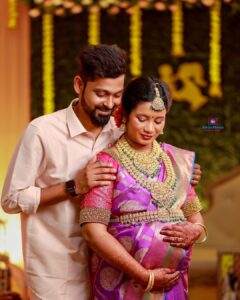

Welcoming a new life into the world is a journey filled with anticipation, prayer, and overwhelming joy. In the rich tapestry of South Indian traditions, few rituals are as spiritually significant or visually stunning as the Seemantham ceremony. If you’ve ever seen a glowing mother-to-be adorned in silk and gold, surrounded by the rhythmic chanting of Vedic hymns and the laughter of family, you have witnessed the beauty of this “parting of the hair” ritual.
Whether you are a mother-to-be planning your own function or a guest curious about the cultural depth of this event, this guide will walk you through everything you need to know about the Seemantham ceremony.
What is Seemantham ceremony? Understanding the Spiritual Roots
At its core, Seemantham is a traditional South Indian Vedic ritual, primarily celebrated in Tamil Nadu, Andhra Pradesh, Telangana, and Karnataka. While often compared to a “baby shower,” its purpose goes far beyond gifts and cake.
The word itself is derived from Sanskrit, where Seemantha refers to the “parting of the hair.” Historically, the husband parts the wife’s hair with a porcupine quill or a stalk of darbha grass. This act is more than a gesture of affection; it is believed to activate the mother’s nerves and stimulate the brain of the growing fetus.
The primary goals of the ceremony are:
Protection: Warding off evil spirits or negative energy from the mother and child.
Intellectual Growth: Invoking the gods to bless the child with sharp intellect and a long life.
Mental Health: Ensuring the mother-to-be remains in a positive, happy state of mind during the final trimester.
The Difference Between Seemantham and Valaikappu
It is a common point of confusion, but there is a distinct difference between seemantham and valaikappu.
Seemantham is a religious function involving Vedic priests and specific rituals aimed at the health and intellect of the baby.
Valaikappu is a more social and cultural ceremony where the mother is adorned with glass bangles. Often, both are performed on the same day—Seemantham in the morning and Valaikappu in the afternoon.
When is the best time for a Seemantham function?
Timing is everything when it comes to Vedic rituals. Unlike a Western baby shower, which can happen anytime in the third trimester, the Seemantham date is meticulously calculated.
Choosing the Right Month
Traditionally, Seemantham is performed during the odd months of pregnancy—specifically the 7th or 9th month.
The 7th Month: This is the most popular choice. By this stage, the fetus’s hearing is well-developed, and it is believed the baby can sense the vibrations of the Vedic chants.
The 9th Month: Some families choose the 9th month if the 7th month is bypassed due to health reasons or astrological misalignments.
Why the 8th Month is Avoided
If you are wondering, “can we do seemantham in 8th month?”, the traditional answer is usually no. According to Vedic astrology, the 8th month is governed by unstable energies that are not considered auspicious for such a vital ritual. Most elders and priests will recommend sticking to the 7th or 9th month for safety and prosperity.
Calculating the Muhurtham
Finding the auspicious dates for seemantham 2026 involves looking at the mother’s birth star (Nakshatra). A priest will check for a day that has a favorable Tithi and Lagna to ensure the ceremony brings the maximum blessing. If you are planning ahead, you might want to look at the best time for seemantham function planning guide to align your logistics with these sacred dates.
Rituals and Procedures: What Happens During the Function?
The day of a Seemantham is a whirlwind of color and tradition. Here is a step-by-step look at the seemantham process.
The Vedic Chants and Pumsavana
The ceremony usually begins with Pumsavana, a ritual to ensure the healthy development of the child. The husband plays a central role here, performing the “parting of the hair” ritual while the priests chant mantras. This is a deeply intimate and spiritual moment.
The Role of the Family
Seemantham is a collective blessing. Elders from both sides of the family apply sandalwood paste and turmeric to the mother’s face and hands. This is not just for beauty; turmeric is a natural cleanser and sandalwood provides a cooling effect, which is very helpful for a pregnant woman’s comfort.
The Valaikappu (Bangle Ceremony)
This is the part everyone waits for! The mother is made to wear dozens of colorful glass bangles. The sound of these bangles is believed to reach the baby’s ears in the womb, creating a soothing acoustic environment. For inspiration on how this looks, you can check out traditional seemantham photos to see the vibrant colors and joy of the event.
Fashion and Styling: The Radiant Seemantham Look
Every mother wants to look her best while maintaining comfort. The south indian seemantham look is iconic for its elegance.
Choosing the Perfect Saree
Most mothers opt for a traditional saree for seemantham function, usually a Kanjeevaram or silk saree.
Color Palette: Traditional colors like mustard yellow, parrot green, or maroon are favorites. Green is especially popular as it symbolizes fertility and new beginnings.
Fabric: Ensure the silk is breathable. You will be sitting for long periods near the ritual fire (Homa), so comfort is key.
Jewelry and Hair
Temple jewelry is the go-to for this occasion. Heavy gold necklaces, Jhumkas, and a Vanki (armband) complete the look. The hair is usually braided and adorned with a Jadai (floral hair extension) or fresh jasmine flowers. For more visual ideas, our saree maternity photoshoot ideas guide offers plenty of inspiration for styling.
Capturing the Memories: Seemantham Photography Ideas
Because this is a once-in-a-lifetime event for each pregnancy, photography has become a central part of the celebration.
Traditional vs. Candid Poses
While the rituals are happening, seemantham candid photography is essential. It captures the raw emotions—the mother’s nervous smile, the husband’s protective stance, and the grandparents’ teary eyes.
Popular Poses to Try:
The Belly Touch: A classic shot of the husband’s hands on the mother’s bump.
The Bangle Close-up: Capturing the intricate glass bangles against the silk saree.
The Blessing: A wide shot of the elders showering flower petals (Akshata) on the couple.
For a detailed list of poses, visit our baby shower photoshoot ideas and poses guide.
Seemantham Album Design
After the event, your photos deserve a home. Modern seemantham album design has moved away from simple plastic sleeves. Today, “Coffee Table” style books with matte finishes and storytelling layouts are the trend. You can see examples of how we craft these memories at seemantham album design examples.
Planning the Event: Items and Invitations
Planning a Seemantham can be overwhelming, but breaking it down into a seemantham function items list makes it manageable.
Essential Items:
Ritual Items: Darbha grass, porcupine quill, fruits, and flowers.
Sweets: Specifically, Laddoos or Athirasam are often distributed to guests.
Gifts: Small return gifts like silver coins, kumkum boxes, or even seemantham gifts for guests like small succulent plants are becoming popular.
The Invitation
Your invitation sets the tone. Whether it’s a traditional card or a modern digital invite, ensure it mentions the Muhurtham time clearly. If you are hosting a simpler event at home, you might find our guide on how to plan simple valaikappu function at home very useful.
Why is Seemantham Celebrated? The Scientific Perspective
While the tradition is ancient, it has surprising modern relevance.
Stress Reduction: The gathering of loved ones provides a massive psychological boost to the mother.
Aural Stimulation: Modern science confirms that by the 7th month, babies can hear external sounds. The rhythmic frequency of Sanskrit shlokas has been shown to have a calming effect on the nervous system.
Community Support: It marks the transition of the woman into a mother, surrounded by a support system that promises to help her through the upcoming challenges.
Frequently Asked Questions (FAQs)
Which month is good for Seemantham?
The 7th or 9th month is considered the best. Specifically, the 7th month is preferred as the mother is physically more comfortable than in the 9th month.
What is the meaning of Seemantham?
It means “parting the hair.” It is a symbolic ritual where the husband parts the wife’s hair to bless the mother and the unborn child.
Can we do Seemantham for a second baby?
Absolutely! While some families perform a grand Seemantham only for the first child, it is increasingly common to celebrate it for every pregnancy to ensure the child receives the same spiritual blessings.
Is there a difference between Seemantham and a Baby Shower?
Yes. A baby shower is a social celebration focusing on gifts and the mother’s joy. Seemantham is a religious Vedic ceremony with specific spiritual procedures meant to benefit the baby’s development.
What should I gift for a Seemantham function?
Traditional gifts include silver items, silk clothes for the mother, or items for the upcoming baby. If you are the host, popular return gifts include traditional bags with betel leaves, nuts, and a small souvenir.
Can Seemantham be done at home?
Yes, many people prefer an intimate setting. If you are looking for decor or pose ideas for a home setting, check out baby shower photoshoot poses at home.
Final Thoughts: A Celebration of Life
The Seemantham ceremony is more than just a function; it is a profound expression of love, culture, and hope. It bridges the gap between ancient wisdom and the modern joy of parenthood. By choosing the right time, honoring the rituals, and capturing those fleeting moments through photography, you create a legacy for your child before they even arrive.
If you are looking for the best candid photographers for seemantham in Coimbatore, remember that the best photos come from understanding the heart of the tradition.
Are you planning your Seemantham soon, or are you looking for specific advice on themes and decorations?